Quarterly estimated tax payments confuse a lot of self-employed Vietnamese Americans the first year they run a nail salon, restaurant, or small shop. Nobody withholds anything from your income. No employer sends a chunk to the IRS every paycheck the way it happened at a W-2 job. If you expect to owe $1,000 or more for the year, the IRS wants four payments spread across the year, not one lump sum in April.
Skip these payments and the IRS charges an underpayment penalty, calculated like interest on the amount you should have paid on time. The good news: there is a simple rule that lets you avoid that penalty completely, even if you have no idea what this year’s profit will look like.
This guide walks through the deadlines, the safe harbor formula, and a worked example using real numbers.
Why Self-Employed Income Needs Quarterly Estimated Tax
W-2 employees have taxes withheld automatically every pay period. Self-employed owners do not have that safety net. Salon and restaurant profit is treated as ordinary income for federal tax purposes. It also carries self-employment tax on top of income tax.
Self-employment tax covers Social Security and Medicare. It runs 15.3% on most net earnings, separate from your regular federal bracket. Combine both and a profitable salon owner can easily owe well above the $1,000 threshold that triggers mandatory estimated payments.
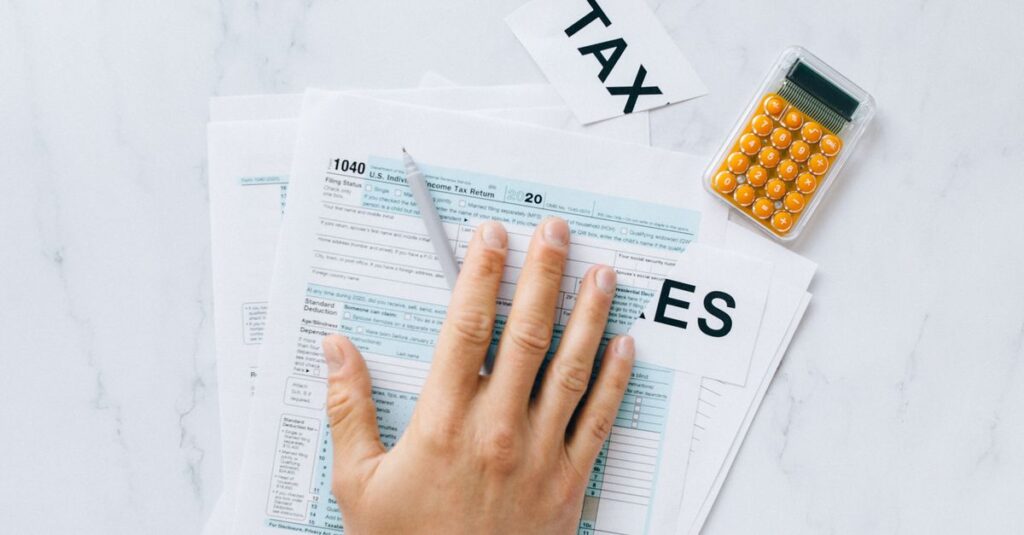
The IRS does not wait until April to collect. It expects tax paid throughout the year, roughly matching when the income was earned. Form 1040-ES is the vehicle for that: four vouchers, four payments, one running total toward what you owe.
Skipping this is not “saving up” for a bigger refund. It is a warning sign the IRS built a penalty specifically to discourage.
When Are the Quarterly Estimated Tax Due Dates
Estimated payments come due four times a year, but not every three months on the calendar. The IRS periods are:
1. April 15 — covers income from January through March 2. June 15 — covers April and May (just two months) 3. September 15 — covers June through August 4. January 15 (following year) — covers September through December
Notice the second period is shorter than the others. That is by design, not a mistake. If any date falls on a weekend or federal holiday, the deadline shifts to the next business day.
Miss a due date and the penalty clock starts on the unpaid amount from that date forward, even if you pay everything by April 15 the following year. Paying late is better than not paying, but paying on time avoids the charge entirely.
Mark all four dates on a calendar the day you register your business. Salon and restaurant owners running tight on cash flow sometimes push payments back a few weeks, not realizing the penalty accrues from the original due date, not from whenever they eventually send the check.
The Safe Harbor Rule That Avoids Quarterly Estimated Tax Penalties
This is the part that actually protects you. The IRS will not charge an underpayment penalty if you meet either of these tests through timely payments:
- You paid at least 90% of this year’s actual tax liability, or
- You paid at least 100% of last year’s total tax liability (110% if your prior-year adjusted gross income was above $150,000)
The second option is the one most self-employed owners lean on, because it does not require guessing this year’s income. You already know last year’s number. It sat on your filed return.
Meet either test and you owe no penalty at filing, regardless of how much tax you ultimately owe once the return is done. You could owe an extra $8,000 in April and still pay zero penalty, as long as the safe harbor payments were made on time.
A Simple Formula: Pay 25% of Last Year’s Tax Each Quarter
Here is the practical version many self-employed owners use. Take your total tax liability from last year’s return and divide by four. Pay that amount by each due date.
Worked example: A restaurant owner’s 2025 return showed $16,000 in total tax (income tax plus self-employment tax combined). Divide by four and each quarterly payment comes to $4,000.
- April 15: $4,000
- June 15: $4,000
- September 15: $4,000
- January 15: $4,000
Total paid for the year: $16,000, which is exactly 100% of the prior year’s liability. Safe harbor met. No penalty, no matter what this year’s actual profit turns out to be — even a strong year with $22,000 in real tax owed.
The only adjustment needed: if this year’s income is dramatically higher, consider paying more than the 25% baseline. The safe harbor still works using last year’s number, but you will owe the difference as a lump sum in April, so bumping payments up smooths out the cash flow.
Federal Isn’t the Only Estimated Tax
Most states with an income tax also require estimated payments, and their rules rarely match the IRS calendar exactly. Some states use different due dates. Others calculate safe harbor thresholds differently, or skip the higher-AGI 110% rule altogether.
Check your specific state’s department of revenue for its own quarterly estimated tax form and schedule. A salon owner in Texas, with no state income tax, has none of this to track at the state level. A restaurant owner in California faces both federal Form 1040-ES and a separate state estimated payment voucher, on its own timeline.
Do not assume the federal safe harbor calculation automatically satisfies your state. Confirm separately, ideally with a CPA who knows your state’s specific rules for self-employed filers.
For the full federal form and instructions, see the IRS Form 1040-ES page. If you have not yet reviewed which write-offs reduce that tax bill in the first place, our nail salon owner tax deductions guide covers the deductions worth claiming before you calculate any of this.
FAQ
Do I have to pay quarterly estimated taxes if I am self-employed?
Yes, generally, if you expect to owe $1,000 or more in tax for the year after subtracting withholding and credits. Most self-employed salon and restaurant owners meet this threshold easily once profit exceeds a modest amount.
What happens if I skip a quarterly payment?
The IRS charges an underpayment penalty calculated like interest, starting from the missed due date. Paying late still stops further penalty from accruing, but the initial gap still gets charged.
Can I just pay everything at once in April?
You can, but you will likely owe the underpayment penalty for the earlier missed quarters. The penalty applies quarter by quarter, not just to the total balance at filing.
How do I know how much to pay each quarter?
Divide last year’s total tax liability by four for the simplest safe harbor approach. Adjust upward if this year’s income is running well above last year’s.
Does the safe harbor rule really protect me no matter what I owe later?
Yes. As long as you paid 100% of last year’s liability (110% if your prior AGI exceeded $150,000) through timely quarterly payments, no penalty applies at filing.
Do I need to pay state estimated taxes too?
In most states with income tax, yes. Check your state’s specific due dates and safe harbor rules, since they often differ from the federal schedule.
Quick Summary
- Self-employed income has no withholding, so quarterly estimated payments are required once you expect to owe $1,000 or more for the year.
- The safe harbor rule lets you pay 100% of last year’s tax liability (110% above $150,000 AGI) in four installments and owe zero penalty, regardless of this year’s actual bill.
- Federal and state estimated tax rules often differ, so confirm your state’s due dates and thresholds separately from the IRS calendar.
This post is for informational purposes only and does not constitute financial, tax, or legal advice. Laws and regulations change frequently. Please consult a qualified professional for your specific situation.